Low-Light Aquarium Plants and How to Grow Them
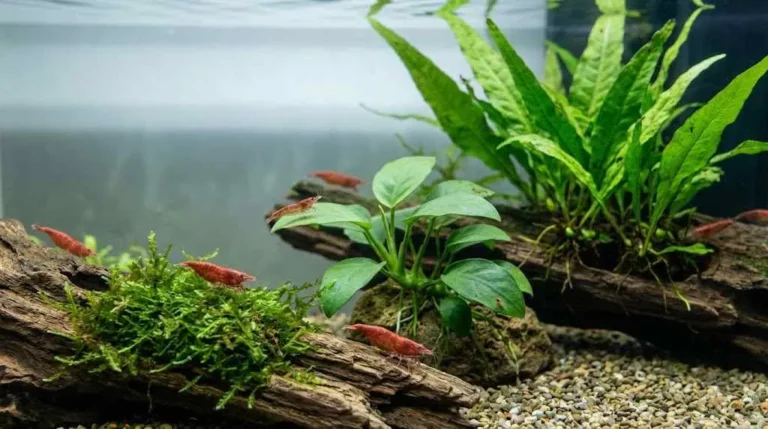
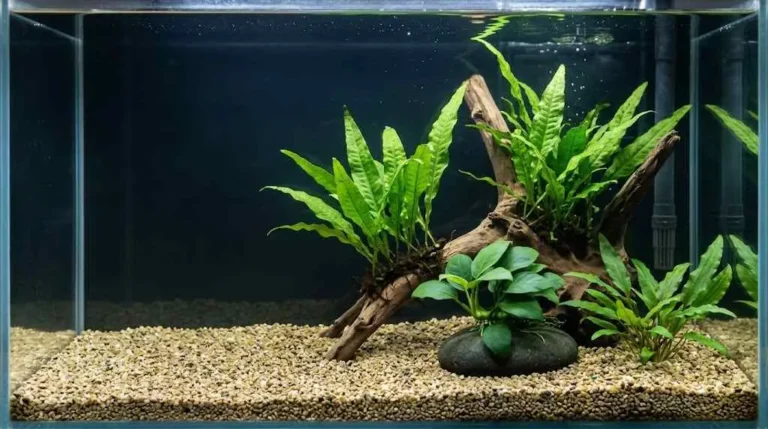
Low light aquarium plants can suit an aquarium with modest lighting, especially when you want growth that is easier to manage. Anubias, Java fern, Java moss, selected Cryptocoryne and certain Bucephalandra are useful starting points. Their suitability depends on where you place them, how you plant them and the appearance you expect.
Lower light often means slower development and less frequent reshaping. It does not mean darkness, no nutrients or no maintenance. Choose plants for the light reaching their leaves, then judge progress through healthy new growth rather than how quickly they fill the aquarium.
Table of Contents
What counts as low light in an aquarium?
“Low light” is a relative description, not a standardized setting on a fixture. A plant attached high on wood may receive considerably more light than another beneath an overhang in the same aquarium. Depth, distance from the lamp, fixture coverage and shade all affect the result.
Three ideas help explain the difference:
- Intensity: how much light reaches a surface at a particular moment.
- Photoperiod: how long the light operates each day.
- Daily light exposure: the accumulated light received over the day.
These are related, but changing one does not necessarily reproduce the effect of changing another. The definitions are established in horticultural lighting; terrestrial crop targets should not be transferred directly to submerged aquarium plants.
Before buying, assess the intended planting location:
- How far below the fixture will the leaves sit?
- Will wood, rocks, taller plants or floating cover block light?
- Does the fixture illuminate that area evenly?
- Are existing plants producing healthy new growth there?
- Are reliable measurements available at leaf level?
An underwater-suitable PAR meter can help compare locations. Its reading describes available photosynthetically active light, not whether every plant will succeed there. Wattage, advertised lumens and a dimmer percentage are not universal substitutes for measurements at the leaves.
A bright-looking photograph is not a lighting assessment. For equipment questions, see choosing and adjusting a planted-aquarium fixture [INTERNAL LINK NEEDED: EQ08 — Lighting for Planted Aquariums: Choosing and Adjusting a Fixture].
Compare six low-light aquarium plants
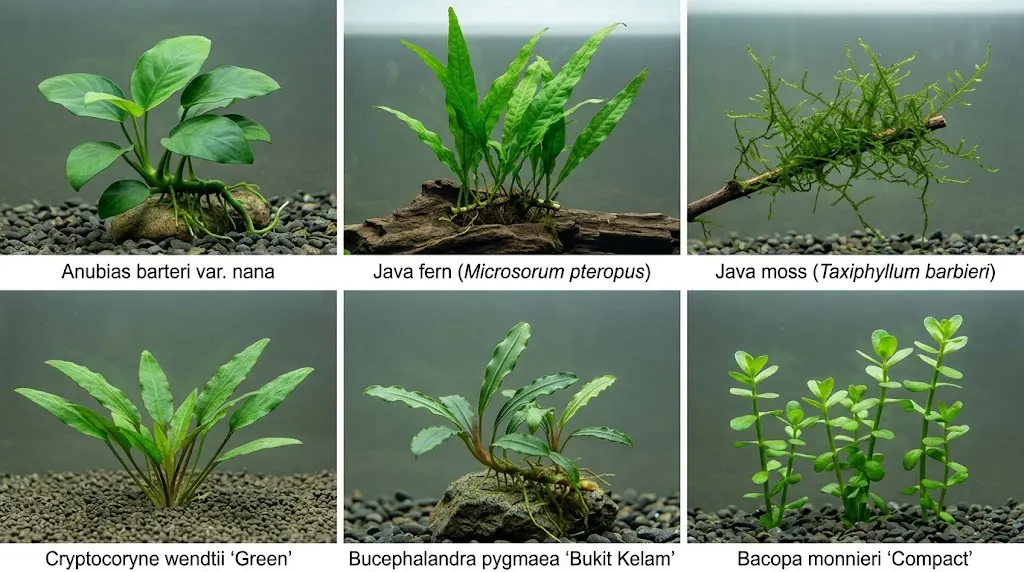
The following plants are documented for submerged aquarium use and modest lighting. Grower descriptions provide practical selection guidance, not guarantees across every aquarium. The profiles below identify the supporting sources.
| Plant | Growth form and planting method | Suitable placement | Expected lower-light appearance and growth | Main maintenance need | Important limitation |
|---|---|---|---|---|---|
| Anubias barteri var. nana | Creeping rhizome; attach to wood or stone | Foreground accents and sheltered midground | Slow development; broad green leaves | Manage shade, debris and algae on older leaves | Slow replacement of damaged foliage |
| Java fern — Microsorum pteropus | Rhizomatous fern; attach with rhizome exposed | Midground or background hardscape | Gradually expanding clump of upright leaves | Thin overcrowded growth selectively | Standard form can dominate a small layout |
| Java moss — Taxiphyllum barbieri | Moss; secure small portions to surfaces | Wood, stones and selected sheltered areas | Fine, irregular growth; appearance varies with conditions | Trim excess and collect loose fragments | Requires work to maintain a neat outline |
| Cryptocoryne wendtii ‘Green’ | Rooted rosette; plant roots in substrate | Midground; farther back in smaller aquariums | Green foliage with variable height and spread | Preserve space around expanding clumps | Purchase size does not predict final footprint |
| Bucephalandra pygmaea ‘Bukit Kelam’ | Creeping rhizome; attach to hardscape | Small rock or wood accents | Slow branching, green leaves with wavy edges | Prevent burial and excessive shading | Takes patience to develop a substantial group |
| Bacopa monnieri ‘Compact’ | Stem plant; plant individual stems | Open foreground-to-midground groups | More upright and less compact under reduced light | Trim and thin stems as needed | Its name does not guarantee a low carpet |
Anubias nana: for a slowly changing layout
Choose Anubias nana when you want a broad-leaved accent on a rock or branch. Its rhizome is the thick creeping stem from which leaves and roots emerge. Keep that stem exposed rather than burying it.
This variety tolerates shade and grows slowly. Long-lived leaves can also accumulate algae, so low maintenance still includes checking their condition and keeping neighboring plants from smothering them.
It suits keepers who prefer occasional adjustments over frequent replanting. Other Anubias varieties can become substantially larger; compare them in Anubias growth and variety selection [INTERNAL LINK NEEDED: AP09 — Anubias Care: Planting, Growth and Variety Selection].
Java fern: for taller structure without rooted planting
Java fern provides upright foliage on wood or stone. The standard form is useful behind smaller plants, provided its expanding leaves have room.
Attach it securely without covering the rhizome. Expect gradual growth rather than an immediately dense backdrop. Regular dark reproductive spots beneath mature leaves can be sporangia, so those spots alone do not establish disease.
This is a useful choice when you want taller planting without disturbing the substrate repeatedly. See Java fern planting and common problems [INTERNAL LINK NEEDED: AP08 — Java Fern Care: Planting, Propagation and Common Problems] for detailed care.
Java moss: for fine texture on selected surfaces
Here, Java moss means Taxiphyllum barbieri, also sold as Bogor moss. Confirm the scientific name rather than assuming all aquarium mosses share its requirements.
Secure small portions to wood or stone with suitable thread. It tolerates modest light and can be trimmed when growth becomes excessive.
Moss suits a natural-looking layout where an irregular outline is acceptable. Keep portions accessible for maintenance: a large concealed mass is harder to inspect and clean than several small patches. Collect trimmings and check them for shrimp before disposal.
Cryptocoryne wendtii ‘Green’: for rooted midground planting
This crypt offers a leafy group rooted in the substrate. Tropica classifies its light demand as low, but its eventual height and spread vary with the aquarium. Treat it as a spreading rosette rather than a guaranteed miniature foreground plant.
It suits a layout you can leave established. Give neighboring plants space rather than repeatedly moving the crypt as it develops.
Cryptocoryne can lose existing leaves during establishment, particularly when transitioning from nursery growth above water to submerged conditions. Assess the remaining plant and emerging growth before discarding it; deteriorating old leaves do not by themselves establish inadequate lighting.
Bucephalandra ‘Bukit Kelam’: for small hardscape accents
Tropica currently lists this plant as Bucephalandra pygmaea ‘Bukit Kelam’, while its description retains the trade name ‘Wavy Green’.
The producer describes slow growth, branching and a preference for lower light. Attach the plant with its creeping rhizome uncovered.
Choose it for a small area where leaf texture matters more than rapid coverage. Confirm the supplied form: the broad label “Bucephalandra” does not establish mature size, coloration or identical care requirements.
Bacopa monnieri ‘Compact’: for keepers willing to trim
This stem plant demonstrates why tolerance and appearance are different questions. It can grow under lower light, but Tropica reports more vertical, less compact growth when light is reduced and supplemental CO2 is absent.
Plant separate stems with space between them. Use it as a small upright group and trim when its height no longer suits the layout. It is a reasonable choice for someone comfortable with occasional stem maintenance, but a poor purchase if the essential goal is a tightly creeping carpet.
Choose by location and growth form
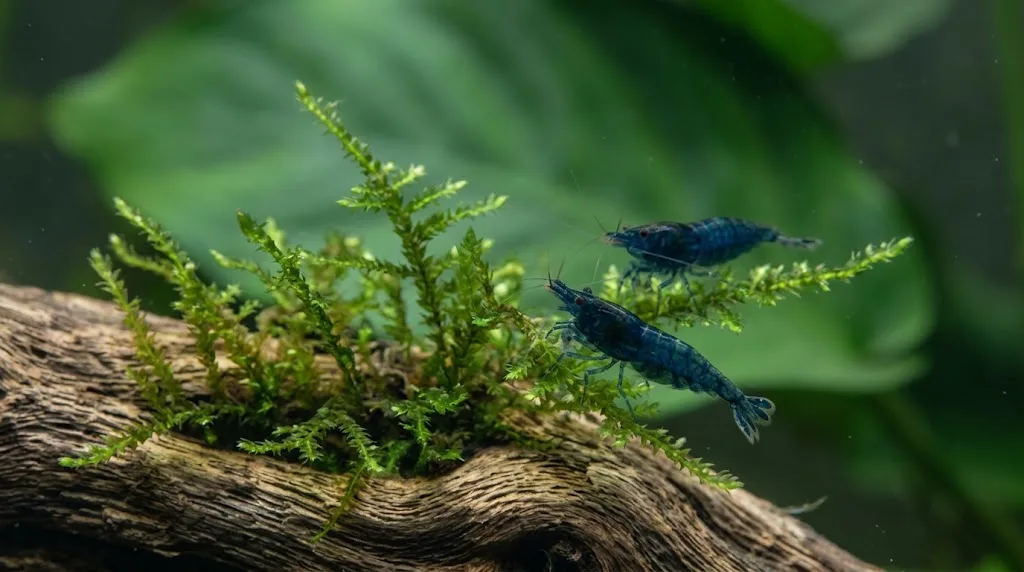
For practical low light aquatic plant selection, decide which part of the aquarium needs planting before choosing names.
- Wood and rock: Anubias, Java fern and the selected Bucephalandra avoid the need for rooted planting.
- Rooted midground: Cryptocoryne wendtii ‘Green’ provides a broader leafy group.
- Taller structure: Standard Java fern can serve as a backdrop where space permits.
- Fine surface texture: Java moss works on selected branches and stones.
- A trimmable group: Bacopa ‘Compact’ offers a different leaf shape, with upright growth accepted as part of the design.
Shade tolerant aquarium plants still need usable light. A lightly sheltered position is different from a dark cavity beneath wood.
A dense carpet or intense red coloration may require a different plant choice or lighting arrangement. Do not buy a plant solely because a photograph shows an appearance achieved under unspecified conditions.
For a wider comparison, use the beginner aquarium-plant selection guide
Plant and position them correctly
Match the method to the growth form:
- Attached rhizome plants: secure Anubias, Java fern and Bucephalandra to hardscape with their rhizomes exposed.
- Rooted rosettes: place crypt roots in the substrate without burying the central point where leaves emerge.
- Stem plants: remove packaging and plant individual Bacopa stems rather than burying a tightly bound bunch.
- Moss: divide into manageable portions and attach where light and maintenance access remain available.
Keep plants moist during preparation. Avoid packing them together to create an instantly full appearance.
Placement needs reviewing as plants grow. A fern that initially shades nothing may later cover an entire crypt. Floating plants receive light near the surface while reducing what reaches submerged foliage beneath them; their success does not demonstrate adequate light below.
Provide nutrients without overcomplicating care
Lower growth demand does not mean zero nutrient demand. Attached plants and moss need access to nutrients in the water, while rooted plants can also draw on the substrate. These are overlapping routes rather than an absolute division into “leaf feeders” and “root feeders.”
Assess what the aquarium already supplies through its water, substrate, livestock feeding and existing fertilization. An inert substrate and a nutrient-containing substrate do not create identical starting conditions.
Use liquid fertilizer or root-zone nutrition when it addresses an identified need. Follow the specific product instructions and consider the aquarium’s inhabitants. One discolored leaf is not enough to identify a deficiency or justify a large dosing change.
See plant nutrients, dosing and shrimp considerations [INTERNAL LINK NEEDED: AP23 — Aquarium Plant Fertilizer: Nutrients, Dosing and Shrimp Considerations].
Set realistic lighting and CO2 expectations
A low light planted tank, a low-technology aquarium and an aquarium without injected CO2 describe different things. The first concerns light; the others concern how the aquarium is managed.
The selected plants can be considered for aquariums without injected CO2. Additional carbon may improve growth where carbon availability is limiting, but adding it does not correct a buried rhizome, excessive shade or unsuitable nutrition. Tropica likewise distinguishes plants that can grow without supplementation from those with greater carbon demands.
Use a consistent lighting schedule and record deliberate changes. Do not assume that leaving a weak fixture on much longer will reliably produce the growth associated with adequate intensity. Judge the combination of placement, duration and plant response.
Maintain a low-light planted tank
Good low light aquarium plant care is mostly observation followed by targeted work:
- Check emerging leaves and shoot tips, not just older foliage.
- Remove clearly deteriorating material while preserving viable growth.
- Thin plants when they shade neighbors or obstruct access.
- Trim moss and stems according to actual growth.
- Collect debris and inspect removed material for small animals.
- Review nutrient provision and lighting records before making changes.
Different growth forms need different trimming. Stem tops can be shortened, whereas a crypt is usually managed by removing selected leaves or thinning an overcrowded group. Slow-growing rhizome plants rarely need the same trimming frequency as vigorous stems.
Low light does not prevent algae, and an old leaf need not remain flawless for the whole plant to be healthy.
Troubleshoot disappointing growth
Use these observations to guide checks rather than diagnose a single cause.
| Observation | Possible explanations | What to check | Proportionate next step |
|---|---|---|---|
| Very slow growth | Normal species pace, establishment, insufficient resources | New shoots, planting date, shade and nutrient provision | Compare progress over time before changing equipment |
| Weak or sparse new growth | Poor light access, crowding or inadequate nutrition | Actual planting position and maintenance records | Address the clearest limitation |
| Deterioration after planting | Transition, handling damage or incorrect planting | Rhizome or crown position; whether new growth remains sound | Correct planting errors and remove deteriorated tissue selectively |
| Algae on older leaves | Long leaf lifespan plus conditions favoring surface growth | Distribution, debris and recent lighting changes | Clean gently where suitable and investigate recurrence |
| Lower leaves become shaded | Expanding neighbors or surface cover | View the plant from above as well as through the glass | Thin the source of shade |
| Expected color or compact form never develops | Cultivar mismatch or expectations based on different conditions | Plant identity and reference-image context | Accept the suitable growth form or reconsider the plant |
Three manageable plant combinations
These are hypothetical layouts, not tested combinations or fixed planting prescriptions.
A slowly changing hardscape display: Combine Anubias nana with ‘Bukit Kelam’ Bucephalandra on separate stones. Assume both receive usable light and remain accessible. The tradeoff is patience: open spaces may remain visible for a long time.
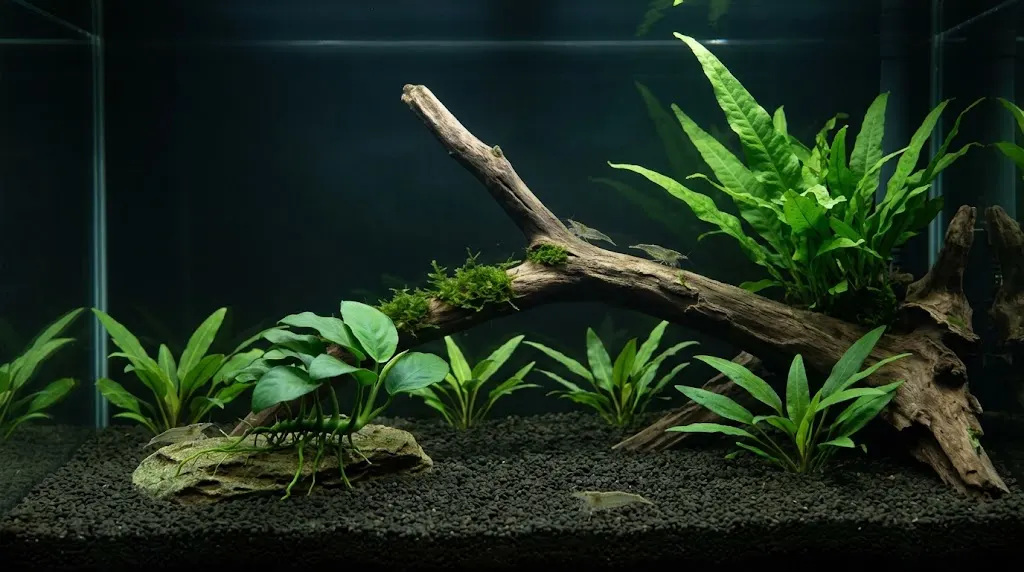
A planted shrimp aquarium with varied texture: Place Java moss on a small branch, crypts in the substrate and Anubias on nearby wood. Leave an observation and feeding area open. The tradeoff is maintaining the moss and preventing the rooted group from crowding that access.
A taller green composition: Use Java fern behind a modest group of Bacopa ‘Compact’. Keep the Bacopa out from beneath the fern’s leaves. This suits someone willing to trim stems; it requires more shaping than an arrangement made entirely from slow-growing attached plants.
Frequently asked questions
Can aquarium plants grow without strong light?
Yes. The selected low light aquatic plants can grow under modest lighting when enough light reaches their leaves. Continued healthy development is more useful evidence than short-term survival.
Are easy low light aquarium plants maintenance-free?
No. They can reduce some trimming demands, but still need suitable placement, nutrient availability and attention to deteriorating or overcrowded growth.
Do all low-light plants need a special substrate?
No. Attached rhizome plants and moss can grow without being planted in substrate. Crypts need rooted placement; the need for additional root nutrition depends on the substrate and other nutrient sources.
Can they grow beneath floating plants?
Sometimes, provided sufficient light passes through. Maintain openings and assess the submerged plants’ new growth rather than assuming shade tolerance permits unrestricted surface coverage.
Choose a few suitable growth forms, leave room for their development and plant them correctly. A manageable aquarium comes from matching expectations to the available conditions, then responding to the plants’ actual progress.