How Many Shrimp Can Your Tank Support?
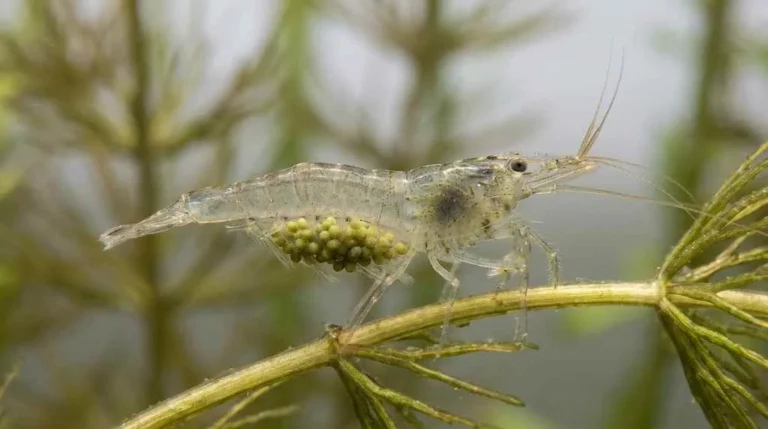
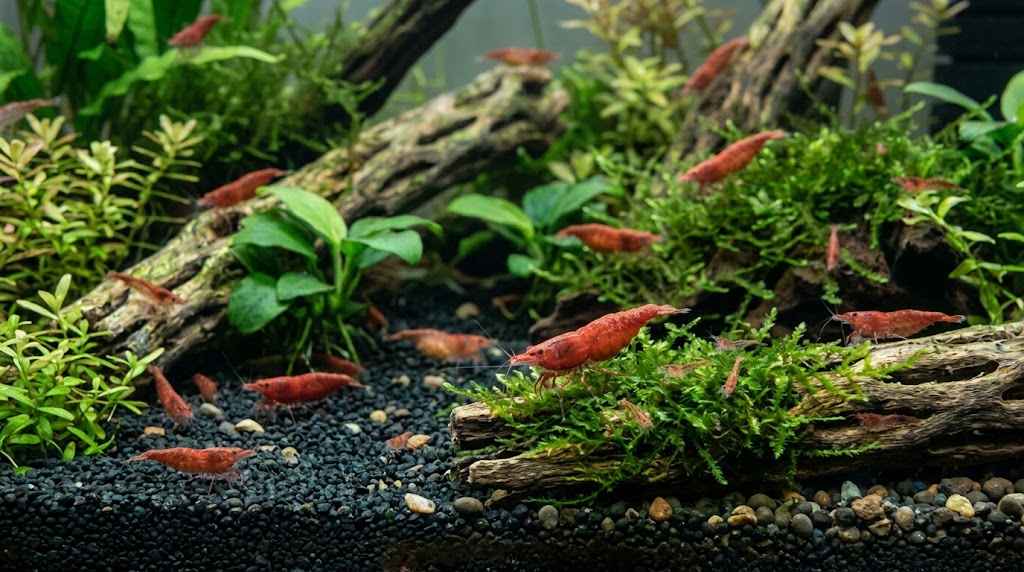
“How many shrimp per gallon?” is best answered with a starting group and a plan for reassessment. For an established, planted aquarium dedicated to cherry shrimp, Neocaridina davidi, consider 5–10 juveniles or subadults in 5 US gallons (18.9 liters), or around 10 in 10 US gallons (37.9 liters).
These are practical starting suggestions based on published husbandry guidance, not scientifically established maximum populations. Aquatic Arts recommends a starting group of 5–10 Neocaridina and lists a 5-US-gallon aquarium; Aquarium Co-Op recommends beginning a breeding colony with at least 10 and favors a larger aquarium. Neither recommendation measures your tank’s carrying capacity.
Before buying, confirm that the aquarium is ready, food and shelter are accessible, and you can accommodate growing juveniles. A smaller purchase cannot make an unprepared aquarium suitable.
Table of Contents
How many shrimp per gallon: three different questions
Separate these numbers before making a stocking decision:
- Starting group: The shrimp you introduce initially, with room to observe their adjustment and future growth.
- Observed population: The animals you can currently count, including different sizes and ages.
- Sustainable capacity: The population the aquarium can support over time with adequate nutrition, suitable water, habitat and manageable maintenance.
Shrimp stocking density describes a count relative to water volume or another measure of space. It is useful for recording conditions, but it does not automatically establish whether those conditions are appropriate.
Ten newly hatched N. davidi do not represent the same immediate demands as ten adults. Nevertheless, those juveniles need feeding opportunities now and room to grow.
Likewise, doubling water volume does not necessarily double sustainable population. The second aquarium may have different plants, filtration, food availability or other inhabitants.
What changes the stocking answer?
Species and expected adult size
Questions about how many Neocaridina shrimp per gallon and how many cherry shrimp per gallon usually concern the same commonly kept species: cherry shrimp are red forms of Neocaridina davidi. Other color forms of that species have comparable basic stocking considerations.
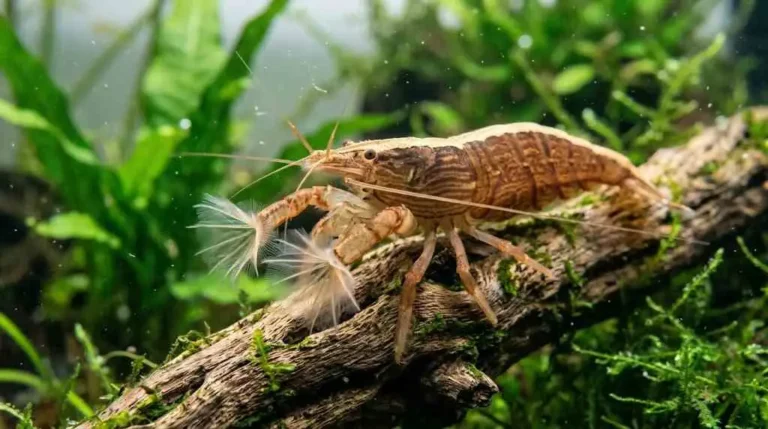
Confirm identity rather than relying on color or the word “shrimp.” Counts intended for these small grazing shrimp should not be transferred automatically to larger shrimp or specialist filter feeders.
Plan around the animals’ adult requirements, even when the shrimp available for purchase are small.
Actual water volume and aquarium maturity
The tank’s label describes nominal capacity. Substrate, rocks, wood and an incomplete fill reduce actual water volume. A heavily decorated aquarium therefore contains less water than its advertised capacity suggests.
Established grazing surfaces also matter. Moss, plant leaves and hardscape provide places to forage and shelter; empty water volume cannot supply those functions.
A newly assembled aquarium needs preparation before stocking. An established aquarium should have demonstrated waste processing under a known load, suitable species-specific conditions and functioning equipment.
Use the freshwater shrimp tank setup guide to assess readiness rather than repeating the setup process here.
Filtration, oxygenation and temperature
Biological filtration processes nitrogenous waste. It does not supply food, create shelter or guarantee sufficient oxygen throughout the aquarium.
A filter’s advertised tank rating is therefore not a shrimp allowance. Inspect actual circulation, intake protection and maintenance needs.
Undetectable ammonia and nitrite are necessary goals, but they show only part of the picture. They do not prove that food access, oxygenation or habitat will remain adequate after another purchase.
Temperature can also change growth and reproductive performance. Research on red cherry shrimp found temperature-dependent differences, but it does not provide a formula for adjusting shrimp numbers per gallon. Maintain suitable conditions rather than manipulating temperature to accommodate more animals.
Food access and other inhabitants
Watch who reaches the food. A colony may have plenty of food in total while smaller shrimp struggle to access a concentrated feeding spot.
Provide suitable supplementary food and adjust portions through observation. Grazing surfaces are valuable, but their appearance does not reveal how much nutrition they supply.
Fish, snails and other shrimp also consume food and contribute waste. Fish may prey on young shrimp even when adults remain visible and apparently undisturbed. Community aquariums require a fresh assessment; do not simply subtract an arbitrary number from a shrimp-only recommendation.
Maintenance you can sustain
Capacity includes the routine you can reliably maintain.
If appropriate feeding increasingly causes leftover accumulation, filters clog sooner, or water conditions deteriorate between planned maintenance sessions, pause further stocking and investigate. An aquarium that requires repeated emergency intervention has not demonstrated sustainable capacity.
How many shrimp in a 5-gallon or 10-gallon tank?
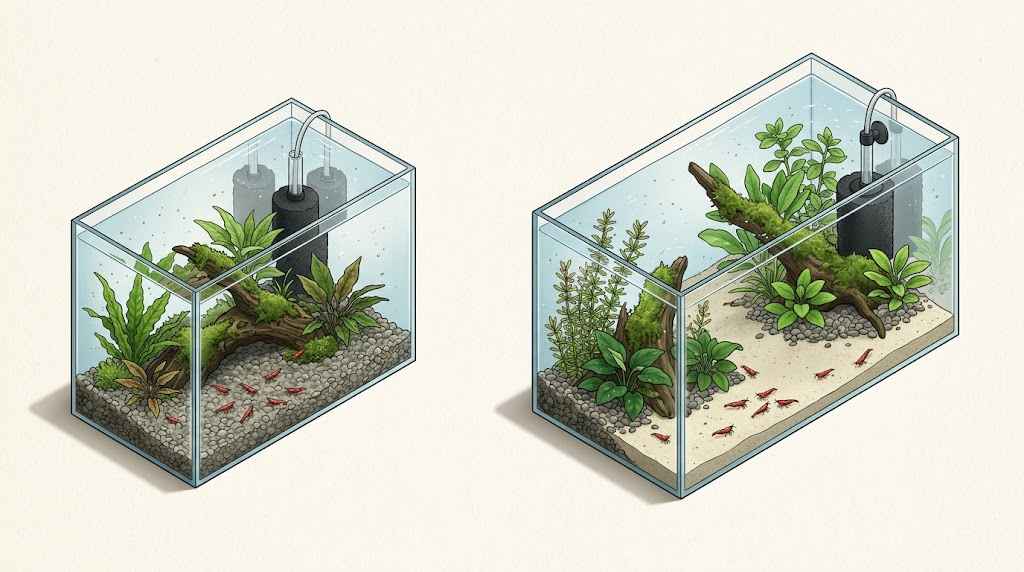
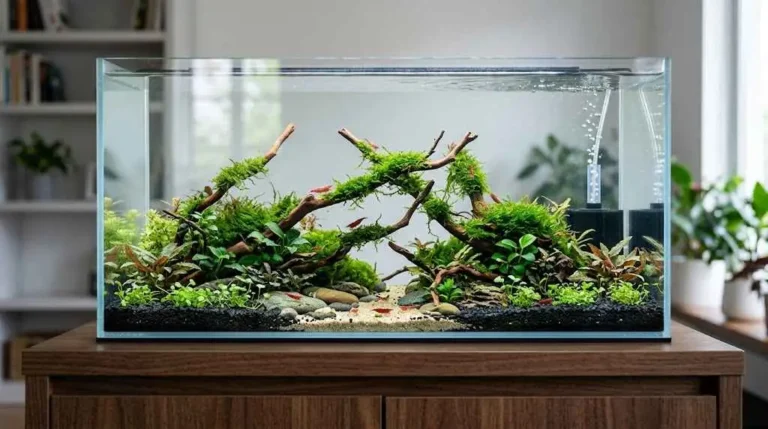
The comparison below assumes established, filtered, planted aquariums dedicated to N. davidi, with suitable water and accessible food. Starting counts refer to purchased juveniles or subadults, with their adult growth included in the plan—not newly hatched shrimplets.
| Nominal aquarium size | Starting-group planning guidance | Conditions behind the suggestion | Reassess when… |
|---|---|---|---|
| 5 US gallons / 18.9 liters | 5–10 juvenile or subadult N. davidi | Established grazing habitat, protected filter intake, consistent observation and no competing livestock | Juveniles become numerous, feeding access changes or maintenance becomes harder to sustain |
| 10 US gallons / 37.9 liters | Around 10 juvenile or subadult N. davidi | The same preparation, with more scope for habitat and colony growth | The adult population increases, other animals are added or water and maintenance trends change |
The smaller-tank suggestion adapts Aquatic Arts’ general colony-starting guidance. For the larger aquarium, starting around 10 is a cautious choice within Aquarium Co-Op’s published shrimp-only stocking suggestions. These are husbandry examples, not validated tank-specific limits.
The larger tank does not need twice the initial group. Its additional space can remain available for growth.
Avoid turning either example into a permanent cherry shrimp per gallon rule. An established colony may exceed its starting count without being overcrowded, while a poorly prepared aquarium can struggle with fewer animals.
A practical stocking decision process
- Identify the species and life stage. Confirm what you are buying and plan for its adult requirements.
- Confirm readiness. Review waste-processing evidence, water suitability, equipment and grazing habitat.
- Assess existing inhabitants. Include their waste, food competition and potential predation.
- Choose a modest starting group. Use relevant husbandry guidance and the assumptions behind it.
- Establish a baseline. Record initial numbers and sizes, feeding amounts, water tests and maintenance.
- Reassess before purchasing more. Look for consistent food access, suitable conditions and a routine you can sustain.
- Include reproduction. Count developing juveniles as future adults in your planning.
Do not keep adding shrimp until ammonia appears or animals die. That tests the system by allowing a problem to develop.
Purchases and reproduction increase demand differently, but both can enlarge the future adult population.
How to assess an established colony
Exact counts become difficult in planted aquariums. Small juveniles disappear into moss, and adults may remain behind hardscape.
Use approximate population trends alongside repeated observations. Compare similar feeding sessions and inspect several parts of the aquarium rather than counting only the shrimp gathered at one dish.
| Observation | Possible explanations | Check before blaming population size |
|---|---|---|
| A crowd gathers around food | Normal attraction to a concentrated food source; limited feeding access | Whether smaller shrimp can feed and whether food remains elsewhere |
| Fewer shrimp are visible | Hiding, molting, dense plant growth, predation or losses | Sheltered areas, tankmates, recent changes and water conditions |
| Food remains uneaten | Excessive portions, inaccessible food or reduced appetite | Portion size, food placement, behavior and water tests |
| Nitrate rises faster than before | More feeding, population growth, source-water changes or reduced plant uptake | Replacement water, feeding records, plant condition and maintenance |
| Growth appears uneven | Age differences, nutrition, competition or other environmental factors | Compare similar-sized cohorts and observe access to food |
| Deaths occur | Water problems, acclimation issues, contamination, disease or other causes | Investigate promptly; a head count alone cannot identify the cause |
Controlled research illustrates why survival alone is an inadequate measure. In a juvenile N. davidi grow-out experiment, higher density reduced growth while survival remained high. The experimental densities should not be copied into home aquariums, but the result supports checking growth and resource access before obvious losses occur.
Reproduction changes future demand
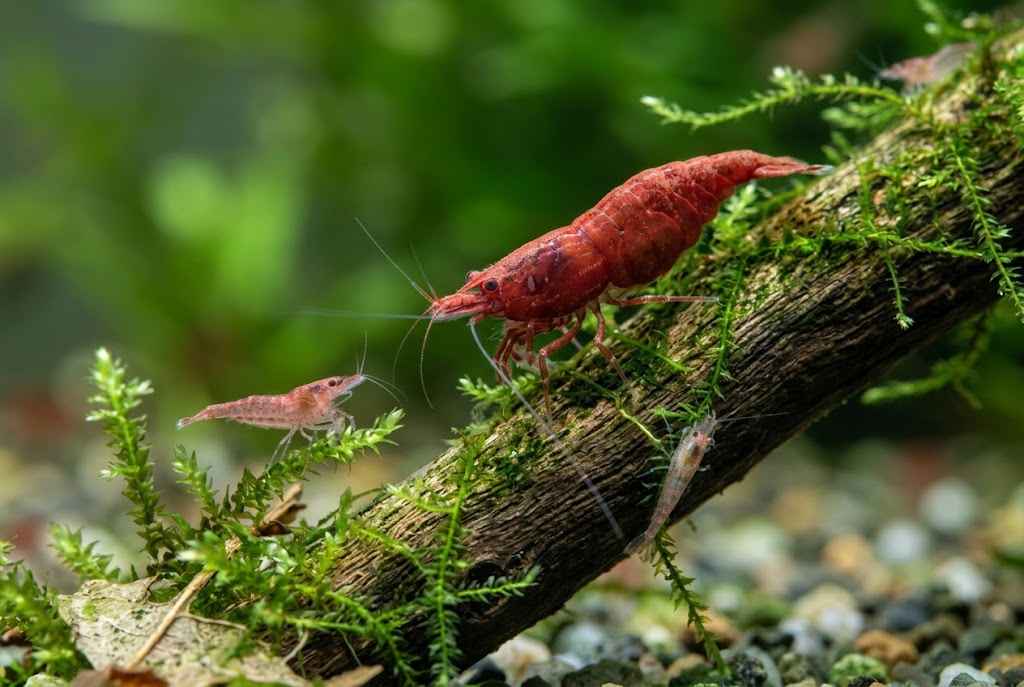
Cherry shrimp can reproduce in freshwater aquariums, and their young develop into small shrimp without requiring a separate marine larval system. A mixed-sex group may therefore grow without additional purchases.
Do not predict an exact doubling time. Sex composition, maturity, temperature, feeding, predation and juvenile survival all affect the outcome.
A newly visible group of shrimplets may add little immediate biomass, but their needs change as they grow. Plan before the aquarium contains a much larger adult colony.
Nor should you assume reproduction will stop at a healthy population. Reduced breeding can have several explanations and is not a dependable welfare safeguard.
For breeding details, see how cherry and Neocaridina colonies reproduce — How to Breed Cherry and Neocaridina Shrimp.
Shrimp population control: practical options
Pause additional purchases. This avoids adding demand while you assess the colony, although existing shrimp may continue reproducing.
Arrange rehoming early. Contact suitable local aquarists, aquarium clubs or shops before the aquarium becomes difficult to maintain. Confirm that recipients have appropriate housing; shops may not accept every group.
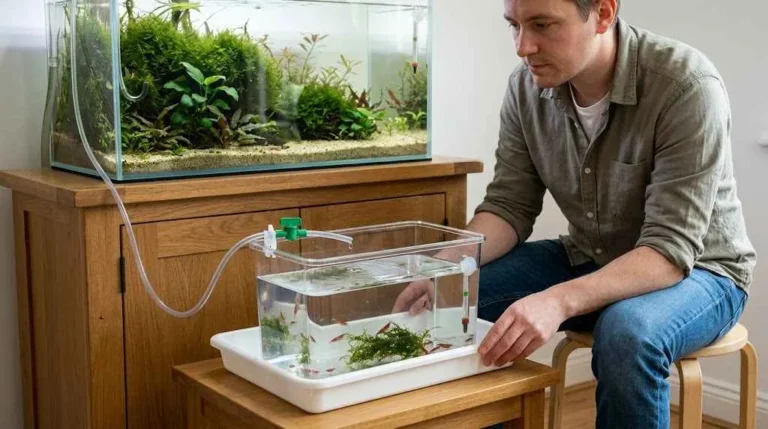
Prepare another aquarium before moving animals. It needs its own suitable water, established filtration and habitat. A spare container with fresh water is not automatically ready.
Review breeding goals. For N. davidi, separating confidently sexed mature animals into suitable aquariums can reduce further mating. Juveniles are harder to sex, mistakes are possible, and females already carrying fertilized eggs may still produce young. Separation also creates another aquarium to maintain.
Maintain appropriate feeding. Remove genuine excess and improve distribution, but do not deliberately deprive shrimp to suppress reproduction.
Never release aquarium shrimp outdoors. Do not add predators as a routine population-management tool. Rehoming or planned separation gives you more control over the animals’ care.
Why more maintenance does not solve every capacity problem
A larger filter may improve waste processing, but cannot guarantee sufficient grazing habitat or equitable food access. More food can address inadequate nutrition while also increasing waste if poorly managed.
Water changes help manage dissolved substances; they do not remove predation, enlarge shelter or correct every feeding problem. Increasing maintenance can be useful when it responds to an identified need and remains sustainable.
If suitable conditions depend on repeated emergency water changes, stabilize the aquarium and reconsider population demands. Do not treat recurring deterioration as an acceptable routine.
Use a stable shrimp-tank water-change routine — Shrimp Tank Water Changes: A Stable Maintenance Routine] to plan maintenance around actual conditions.
Choose your next action
- The aquarium is established and the stocking assumptions fit: Introduce a modest starting group and record a baseline.
- Readiness is uncertain: Wait and complete the missing checks.
- Food access, behavior or water trends have changed: Investigate before adding animals.
- The colony is growing but current conditions remain suitable: Pause purchases and plan for juveniles becoming adults.
- Care demands are becoming difficult to sustain: Arrange rehoming or prepare another suitable aquarium.
The useful stocking number is one you can support through growth and routine care. Start modestly, observe the whole colony and make changes before conditions deteriorate.