Cherry Shrimp Care: A Practical Neocaridina Guide
Cherry shrimp need a mature freshwater aquarium, stable water conditions, protected filtration and enough food to support continuous grazing. They can be a good first shrimp species, provided the aquarium is ready before they arrive.
Their small size makes them suitable for modest aquariums, but it also makes problems easy to overlook. A clear tank can still have unsuitable water, and a heavily planted aquarium can still contain fish that eat young shrimp. Successful cherry shrimp care starts with checking those details and building a routine you can maintain.
Table of Contents
Cherry shrimp care at a glance
| Care factor | Practical guidance |
|---|---|
| Common name | Cherry shrimp; red cherry shrimp for the red variety |
| Scientific name | Neocaridina davidi |
| Adult size | Usually around 2–3 cm; larger females can approach 4 cm |
| Expected lifespan | Roughly 1–2 years overall, with substantial variation; not necessarily that long after purchase |
| Feeding | Established grazing surfaces plus small portions of suitable shrimp food |
| Temperature | Around 22–24°C (72–75°F) is a practical routine target |
| Water conditions | Stable, moderately mineralized freshwater; practical pH starting range 6.5–8.0 |
| Water quality | Ammonia and nitrite undetectable; nitrate kept low |
| Tank planning | Around 40 liters (10.6 US gallons) offers useful room for a first colony |
| Compatibility | Peaceful shrimp; vulnerable to fish, particularly as newborns |
| Reproduction | Females carry eggs; young hatch as tiny shrimp and develop entirely in freshwater |
These are planning guidelines. Aquarium maturity, source water and the conditions in which the shrimp were raised also matter.
What are cherry shrimp?
The accepted scientific name is Neocaridina davidi. Neocaridina is the genus; davidi identifies the species. Older aquarium references may use names such as Neocaridina heteropoda. The current name is recognized in taxonomic records.
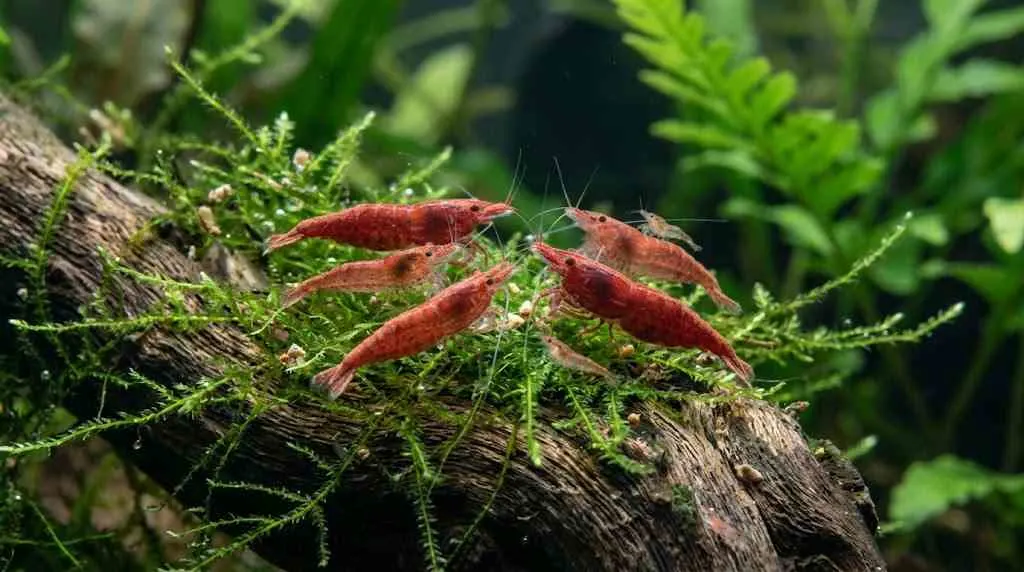
Red cherry shrimp are a selectively bred color form. Many familiar yellow, orange, blue and patterned aquarium varieties also belong to N. davidi. Their color differences do not make them separate species, although other species exist within the genus and should not automatically receive identical care.
Females generally develop a fuller body and stronger coloration than males. Young shrimp can look relatively transparent, making early judgments about sex or final color unreliable.
Different N. davidi color varieties can interbreed. A mixed colony may produce increasingly variable coloration across generations, but a particular pairing does not guarantee a predictable batch of offspring. Choose one established color line if preserving its appearance matters.
Explore Neocaridina colors and breeding lines — Neocaridina Color Varieties: Identification and Breeding Lines] before combining varieties.
Size and lifespan: what to expect
Most adult cherry shrimp remain around 2–3 cm long, with some females reaching approximately 4 cm. Measure the body rather than including the antennae. These are small animals even when fully grown.
A reasonable cherry shrimp lifespan expectation is approximately one to two years overall, rather than several guaranteed years in your aquarium. Research on a Japanese river population estimated 10–15 months, while research summarized by the University of Cologne reported laboratory survival up to 21 months. Neither result establishes a fixed lifespan for every home aquarium.
Age at purchase changes what you observe. A large adult may already have lived much of its life. Ask whether the seller can supply juveniles or young adults, and avoid assuming that every loss after several months proves poor care. Several deaths close together, however, warrant investigation.
Choosing a tank and preparing it properly
Give the colony room to grow
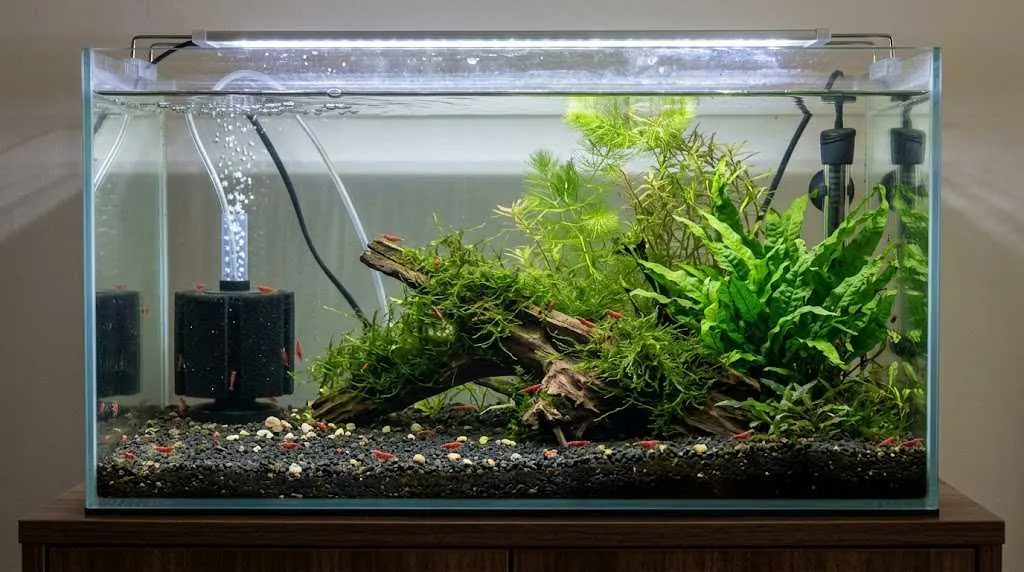
For a first colony, an aquarium around 40 liters (10.6 US gallons) is a practical choice. Aquarium Co-Op similarly favors approximately 38 liters (10 US gallons) or more for breeding colonies. This recommendation provides working room rather than defining a biological minimum.
Smaller aquariums can work, but feeding errors, evaporation and temperature changes affect a smaller water volume more quickly. Consider whether you can reach the filter, remove leftovers and siphon waste without dismantling the layout.
Cherry shrimp tank size also needs to account for future numbers. Plan where additional shrimp could go before the aquarium becomes difficult to maintain. A fixed shrimp-per-gallon formula cannot account for differences in filtration, grazing area, feeding and maintenance.
Cycling and maturity are separate requirements
Cycling establishes the biological filtration needed to process nitrogenous waste. Readings of zero ammonia and nitrite in an empty, unfed aquarium do not demonstrate that this capacity exists.
A mature shrimp aquarium also has established surfaces supporting biofilm: communities of microorganisms and associated organic material that shrimp browse. A newly cycled aquarium may still offer relatively little natural food.
Before stocking, confirm that the filter can process the intended waste load and allow plants, wood and other surfaces to develop. Calendar age alone is insufficient; a tank that has stood unused for several weeks is not automatically ready. Mature aquariums are recommended because they offer both greater stability and natural grazing opportunities.
Protect the filter and provide shelter
Use a sponge filter or cover a powered filter intake with a suitable fine sponge. Check the fit carefully: newborn shrimp can enter gaps that adults cannot.
Provide circulation and surface movement without forcing shrimp to struggle against a strong current. Position plants and hardscape so there are sheltered feeding areas as well as open spaces where you can observe the colony.
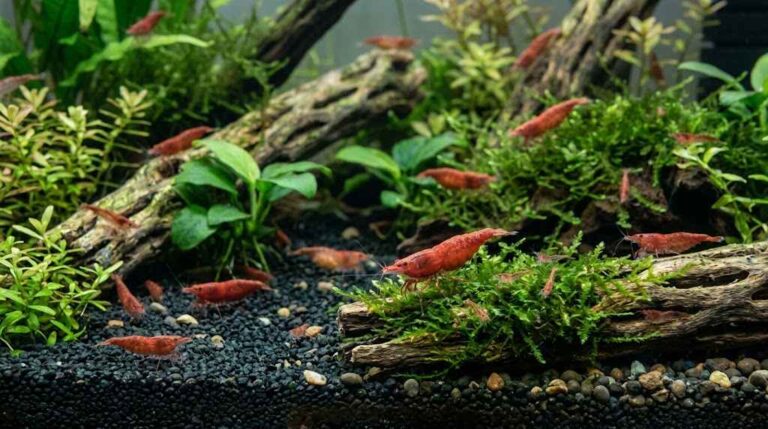
Mosses, fine-leaved plants and established wood offer useful grazing surfaces. Dense cover also gives recently molted shrimp somewhere to retreat. Keep some access around these features so trapped food can be removed.
For planting ideas, see plants that provide shrimp shelter and grazing surfaces — Plants for Shrimp Tanks: Choosing Cover and Grazing Surfaces.
Temperature and water conditions
A practical cherry shrimp temperature target is approximately 22–24°C (72–75°F). Wider tolerance ranges appear in care references, but surviving a temperature does not establish it as the best routine choice.
A heater is useful when the room cannot maintain suitable conditions consistently. Check actual aquarium temperatures, including overnight and during hot weather, before deciding whether one is needed.
For everyday Neocaridina shrimp care, start with stable, moderately mineralized water. A pH of approximately 6.5–8.0 is a useful working range within published husbandry guidance. Aquarium Co-Op recommends GH of at least about 6 dGH and KH of at least about 2 dKH. These are practical reference points, not instructions to increase hardness indefinitely.
The measurements answer different questions:
- GH describes hardness associated mainly with calcium and magnesium.
- KH indicates acid-buffering capacity in ordinary aquarium testing.
- pH describes how acidic or alkaline the water is.
- TDS is commonly estimated from electrical conductivity.
A TDS reading cannot identify which dissolved substances are present. Two water samples can have similar readings but different mineral compositions. It cannot replace GH, KH, ammonia or nitrite tests.
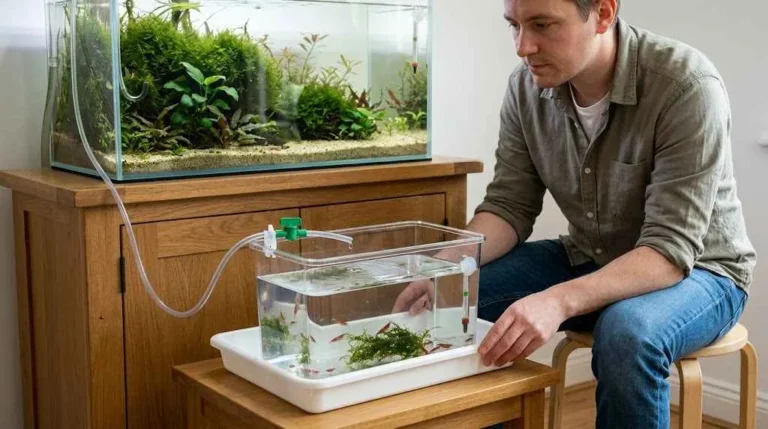
Test both the aquarium and replacement water before making adjustments. Ask the seller about their conditions and acclimation instructions, particularly for shipped shrimp. Avoid applying one prolonged acclimation procedure to every delivery regardless of transport conditions.
For detailed interpretation, use the Neocaridina water-parameter guide — Neocaridina Water Parameters: GH, KH, pH, TDS and Temperature.
Feeding a grazing animal
Cherry shrimp spend much of their time picking at surfaces. This behavior provides access to algae, microorganisms and organic particles, but visible algae alone does not demonstrate that the aquarium supplies a complete diet.
Offer a suitable formulated shrimp food alongside natural grazing. A varied formulation supplies nutrients that cannot be assessed simply by looking at how green the glass appears.
Start with a small portion placed where you can observe it. Follow the food’s feeding directions, then adjust according to what actually happens:
- If food remains uneaten, reduce the next portion or increase the interval.
- If the colony grows and consistently consumes everything, increase feeding gradually.
- If shrimp ignore food unexpectedly, check conditions before adding something else.
- If other animals take the food first, change the feeding location or divide the portion.
Shrimp sometimes carry food into cover, so disappearance from a feeding dish does not always mean consumption. Remove accessible leftovers before they deteriorate. Hikari’s feeding guidance specifically highlights both food-carrying behavior and the importance of avoiding accumulated uneaten food.
No single daily schedule suits a small colony in a mature planted tank and a dense colony with many juveniles. Record what you offer for a week and use the results to establish your routine.
Normal behavior, molting and possible trouble
Steady picking movements, short walks between surfaces and periods inside cover are ordinary observations. A shrimp disappearing temporarily is not automatically a sign of illness.
Shrimp shed their exoskeleton as they grow. An empty molt can resemble a transparent shrimp, and the animal may hide while its new covering hardens. An ordinary clean molt can remain for grazing; remove a confirmed dead shrimp.
Concern increases when behavior changes across the colony: several shrimp become inactive, repeatedly lose balance, stop feeding or gather unusually near the surface. These observations justify checking temperature, water quality and filter operation. They do not identify a single cause.
Likewise, a suspected failed molt does not prove calcium deficiency. Review measured hardness, recent water changes, feeding and possible contamination before deciding what to change. Adding minerals without testing can create another problem.
Keep a simple record of losses, maintenance and unusual behavior. A pattern following water changes is more useful evidence than an isolated photograph of a pale band.
Tankmates and colony protection
Cherry shrimp are peaceful, but many fish regard them as food. Adult survival and successful juvenile recruitment are separate compatibility questions.
A small fish may leave adults alone while consuming newborn shrimp. Dense plants can reduce encounters, but they cannot guarantee protection. Assess mouth size, hunting behavior and access to hiding places rather than relying on a “shrimp-safe” label.
A shrimp-focused aquarium makes it easier to observe feeding, protect juveniles and notice changes. Suitable snails may share the aquarium, although they also consume food and contribute waste.
If keeping shrimp in a community tank, decide beforehand whether your goal is maintaining visible adults or establishing a growing colony. Those goals may require different stocking choices. Fish predation is a central reason dedicated shrimp aquariums are commonly recommended.
Compare other options in the guide to choosing freshwater aquarium shrimp — Freshwater Aquarium Shrimp: A Guide to Choosing Your First Species.
Breeding and planning for young shrimp
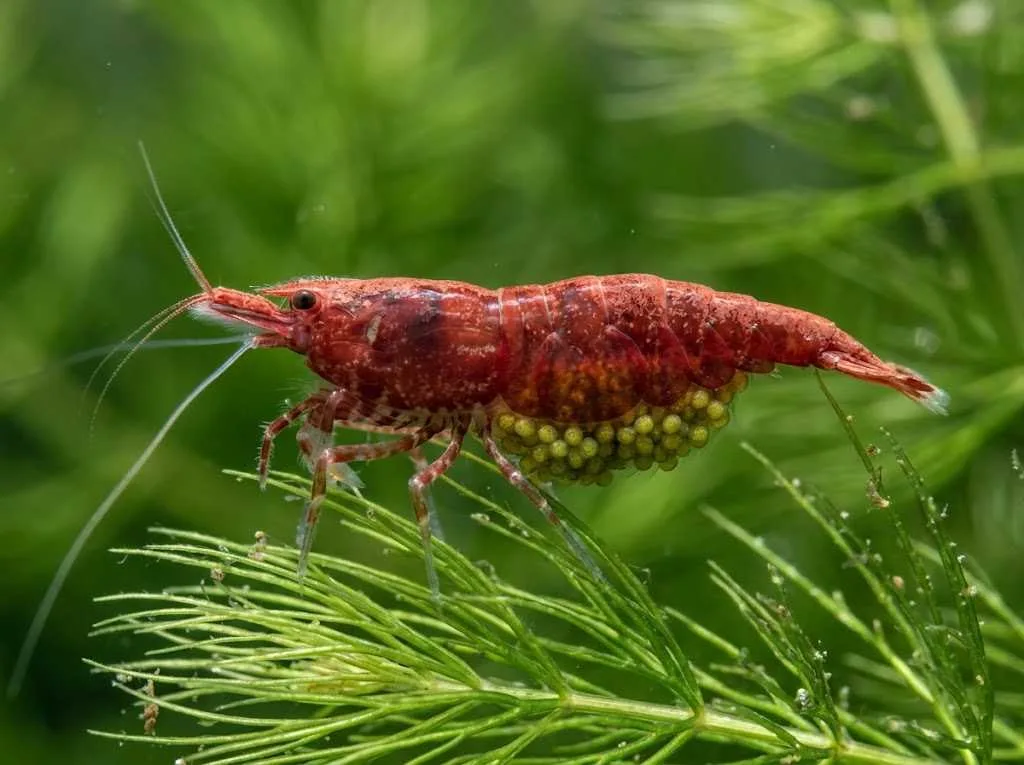
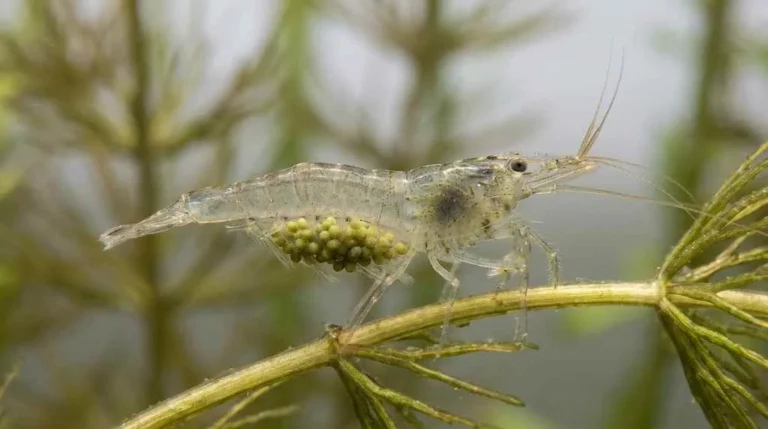
Female cherry shrimp carry eggs beneath the abdomen. The young hatch as miniature shrimp and develop in freshwater, so a colony does not require a separate saltwater larval stage.
Young shrimp need accessible grazing surfaces, protection from filter intakes and food they can reach. Their appearance is a reason to reassess the aquarium’s resources, not an instruction to pour in extra powdered food.
As numbers increase, watch whether feeding access, waste removal and filter maintenance remain manageable. Arrange responsible rehoming or additional space if needed.
For colony preparation and juvenile care, continue to breeding cherry and Neocaridina shrimp — How to Breed Cherry and Neocaridina Shrimp.
A practical maintenance checklist
Check daily:
- Observe several shrimp for normal movement and grazing.
- Confirm the filter is running and water is circulating.
- Check temperature and look for unexpected losses.
- Assess leftovers before offering more food.
Review weekly:
- Test water, especially in recently stocked aquariums or after changes.
- Perform a partial water change appropriate to nitrate trends, feeding and stocking.
- Treat replacement tap water for chlorine and chloramine, and avoid abrupt temperature or chemistry differences.
- Remove concentrated debris while preserving established grazing surfaces.
For a stable aquarium, a weekly 10–20% water change is a reasonable starting routine. Adjust it to the aquarium’s measured needs; contamination or detectable ammonia may require more immediate action.
When flow decreases, gently rinse reusable filter sponge in removed aquarium water. Avoid replacing all established biological media together. Inspect siphoned water and plant trimmings for young shrimp before disposal. Dennerle’s maintenance guidance emphasizes regular partial changes and preserving filter function.
Common mistakes to avoid
Stocking too early. Clear water and a running filter are insufficient evidence of readiness.
Feeding for the population you hope to have. Base portions on the animals present and their observed consumption.
Chasing a perfect number. Repeated chemical adjustments can make otherwise suitable water inconsistent.
Leaving equipment unprotected. Check filter intakes again after cleaning or rearranging equipment.
Assuming cover eliminates predation. A planted community tank can still lose most newborn shrimp.
Treating every symptom as a mineral problem. Test and review recent changes before adding supplements.
Before buying cherry shrimp, confirm that the aquarium has established grazing surfaces, suitable measured water conditions and protected filtration. Then choose a modest initial colony and learn its normal feeding and behavior. Those observations will help you make better decisions as the aquarium develops.